
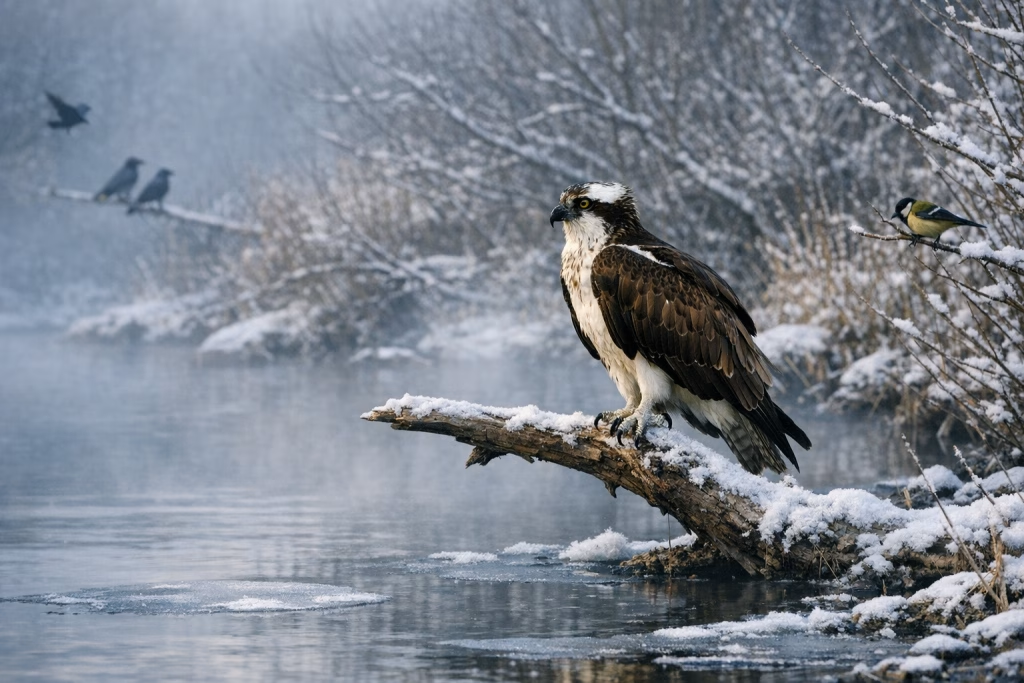
Wild Eagles and Ospreys Weather Nature’s Trials Across Continents
I’ve spent more hours than I care to admit watching nest cams, scanning shoreline mud, and reading field notes from people who simply can’t look away when a big bird lifts off into a hard wind. If you’re anything like me, you know the feeling: you’re making tea, you glance at a live stream “for a second”, and suddenly it’s half an hour later and you’re invested in a pair of raptors you’ve never met.
This article pulls together recent discussion threads and widely shared observations about eagles, ospreys, and smaller coastal birds across several regions—especially North America and parts of Europe—through the lens of weather, food, and human attention. I’ll also add the practical bits you can use if you watch birds yourself, plus a few gentle reminders about what helps (and what really doesn’t) when wildlife and people intersect.
Because online birding communities move fast, I’m careful here: when a detail relies on a specific claim from a social post or an unverified report, I treat it as an anecdote, not a confirmed fact. You deserve information you can trust, and frankly, birds deserve better than our rumour mill.
Why raptors fascinate us (and why weather keeps winning)
Eagles and ospreys sit at the intersection of drama and routine. Their lives look cinematic—talons, fish, aerial chases—yet so much comes down to mundane constraints: temperature, wind, precipitation, and whether last week’s storm snapped the branch that held the nest together. Weather doesn’t “spice things up”; it sets the rules.
When I watch a raptor nest through a cold snap or a heatwave, I’m reminded that birds don’t get a forecast app. They work from cues: wind shifts, pressure changes, the behaviour of prey, the feel of humidity at dawn. They also live in bodies that can overheat or lose heat fast, especially chicks that haven’t yet built strong thermoregulation.
The big three pressures: heat, cold, and wind
- Heat can force chicks to leave shade too early, reduce adult hunting time, and push fish deeper, which hits ospreys hard.
- Cold raises energy costs. Adults must hunt more, and chicks risk hypothermia unless brooded or well-feathered.
- Wind and storms threaten nest integrity. Even a “minor” storm can matter if the nest already sits on a weak fork.
If you follow nest cams, you’ve likely seen these pressures play out in real time. People often focus on the “event” (a hatch, a first flight), but the story usually hinges on the days around it: the relentless wet, the muggy night that never cools down, the gust that turns feeding into an acrobatics routine.
Eagle nest season: waiting, watching, and keeping perspective
Online, eagle season comes with its own vocabulary: “pip watch”, “hatch window”, “branching”, “fledge”. It’s easy to forget how many variables sit behind a single successful season. Even when adults do everything “right”, chance still plays a role—predators, freak weather, human disturbance, or plain bad luck with an egg.
“Pip watch” and why people care so much
In several communities, viewers track the period when an egg begins to crack and hatchlings start to vocalise. People keep time stamps, share clips, and build a tiny collective suspense. I get it. The waiting feels oddly personal, like you’re in the room holding your breath.
Still, I try to keep a simple rule: watch, learn, don’t meddle. Public cameras can educate millions, but they can also tempt people to treat wildlife like a serialised show where a happy ending is guaranteed. It isn’t. Nature rarely hands out tidy narratives.
Snowy nests and cold-weather resilience
Winter nests in northern states and Canada often look like postcards—white branches, adults dusted in snow, a clean silence that makes every movement stand out. In cold conditions, adults may spend longer periods incubating or shielding chicks, which means fewer hunting opportunities. You’ll often see behaviour that looks almost “still”, but it’s actually energy management.
When you watch a bird sit through snow, you’re seeing a balance between insulation, feather positioning, and metabolic heat. Raptors can handle cold surprisingly well, yet chicks remain vulnerable, especially in the earliest stage.
Heatwaves: when shade becomes life support
Heat is the quieter threat because it can look like nothing is happening—no dramatic storm, no visible struggle—until a chick collapses or leaves the nest at the wrong time. In accounts shared online, observers have described extreme temperatures driving premature nest departure in some cases. While I can’t confirm any single incident without local reporting, the underlying risk is well-established: prolonged high heat with warm nights can be lethal, particularly when nests have limited shade.
- Adults may “mantle”—spreading wings to shade chicks rather than to intimidate.
- Feeding patterns may shift to cooler hours, reducing daytime activity.
- Chicks may wander seeking shade, increasing fall risk.
If you live near raptor habitat, you can help in one very simple way: don’t approach nests, don’t fly drones, and don’t “check on them” during extreme heat. Your curiosity can add stress when birds already run on a tight energy budget.
Ospreys over water: fish, territory, and the cost of a bad season
Ospreys feel like the shoreline’s working professionals: they show up, fish hard, defend their nest site, and raise chicks on a schedule that doesn’t care about your weekend plans. They rely on shallow-water fish access, so anything that muddies water, warms it too much, or shifts fish distribution can change the maths overnight.
Nest disputes and pair reshuffles
Across many osprey populations, observers report frequent nest takeovers and partnership changes. I’ve read plenty of “he got booted” style summaries from viewers, but I treat those as interpretation. What’s usually safe to say is this: ospreys can switch mates, defend a nest platform aggressively, and sometimes lose a site to competitors or disturbance.
If you watch these interactions, you’ll notice a pattern: disputes intensify when prime nesting structures are scarce. Human-made platforms can help, but only when installed and maintained properly and placed where birds won’t collide with wires or face constant disturbance.
Water conditions: the hidden variable behind “success”
When you see an osprey fail to bring fish consistently, it’s tempting to blame the individual bird. Yet water conditions might tell the real story:
- Warm water can push fish deeper, making dives less efficient.
- Algal blooms can reduce oxygen and affect fish availability.
- Storm runoff can increase turbidity, which makes hunting harder.
I’ve watched streams where the adult makes dive after dive with empty talons. Some days it looks like stubbornness; more often it’s simply tough hunting.
Small birds, long flights: the shorebird lesson in endurance
Raptors pull your eyes upward, but shorebirds keep your attention on the margins: mudflats, marsh edges, the thin line where land gives way to tidal water. Among recent online chatter, one story that keeps resurfacing involves a small sandpiper turning up far from its usual range. I won’t pin that to a specific individual record here without a formal source, but the broader point stands: shorebirds regularly achieve migration feats that feel borderline impossible.
Why mud matters more than it looks
To a casual walker, a marsh can look like a brown, empty stretch. To a shorebird, it’s a buffet table. Birds probe mud for invertebrates and use shallow water tension and quick bill movements to manage food. It’s fiddly, efficient, and oddly mesmerising when you watch through binoculars.
If you want to support these species, habitat protection beats almost everything else. Quiet marshes with healthy tidal flow matter more than any single “rescue” effort.
Garden birds as sentinels
People often share notes about mockingbirds, sparrows, starlings, and crows visiting feeders during cold spells. These “ordinary” birds act like sentinels for local conditions. When feeder traffic spikes, it often correlates with temperature drops, snow cover, or sudden wind that makes natural foraging more expensive.
From my own window, I’ve seen the same pattern: a normal morning becomes a crowded one when the ground freezes hard. The soundscape changes, too—more alarm calls, more squabbles, more urgency.
Predators, pets, and the uncomfortable truth about “nature” in towns
Many observational threads mention predation: corvids raiding nests, snakes taking eggs, squirrels opportunistically eating chicks, and—most controversially—domestic cats hunting adult songbirds and fledglings. This part always gets heated, because it touches human habits.
I’ll keep it plain. If you care about birds, you’ll get the biggest impact from one decision: keep your cat indoors or supervised outdoors. I say that as someone who likes cats. I also like birds, and I don’t pretend the two preferences always coexist neatly.
What you can do without “playing hero”
- Make windows safer with decals or external screens to reduce collisions.
- Keep feeders clean to reduce disease spread during busy winter periods.
- Plant native shrubs for shelter, not just “pretty” landscaping.
- Leave some leaf litter so insects overwinter and birds keep a natural food chain.
I’ve learned the hard way that good intentions can still cause harm. The safest approach usually looks boring: create better habitat, reduce hazards, and give wildlife space.
Weather “events” that aren’t events (until they are)
One detail I see again and again in first-hand notes is how differently people perceive storms. Someone in one region calls six inches of snow a “non-event”; someone elsewhere treats a light frost as a crisis. Birds don’t care about our baseline. They care about thresholds: can they find food, can they keep warm, can they keep the nest intact?
Cold snaps and feeder crowds
In prairie and northern urban settings, observers frequently mention sharp wind chill and sudden surges in feeder visitors. That fits what we know: cold increases caloric demand, and birds concentrate where food becomes predictable.
If you feed birds, consistency matters. Start feeding only if you can maintain it through the coldest stretch, because birds may begin to rely on a reliable patch during tough days. You don’t need a grand setup. Even a modest feeder, kept clean, can help local populations ride out short bursts of harsh weather.
Fire, smoke, and displaced wildlife
Wildfire risk and smoke events add another layer. Smoke can reduce visibility and irritate respiratory systems; fire can wipe out nesting trees and hunting grounds. People often see birds “out of place” during these periods. I take those reports seriously in principle, even when a specific sighting remains unverified, because displacement during disasters is both plausible and documented.
If you live in a fire-prone region, you can support wildlife indirectly by supporting local habitat corridors and by keeping water sources available at ground level—placed thoughtfully to avoid creating predator traps.
Bird cams, social media, and what OpenAI’s “Images 2.0” post signals
On April 21, 2026, OpenAI shared a short post—“Made with ChatGPT Images 2.0”—with an attached image on X (Twitter). Public posts like that matter to birding communities in a quiet way, because many wildlife pages already rely on shareable visuals: nest highlights, identification guides, migration maps, and educational explainers.
I’m not going to pretend a single image post changes wildlife conservation. Still, in my work with marketing and automation, I’ve seen how quickly visual tools change what teams can produce. If you run a nature organisation, a reserve, a local bird club, or even a personal bird blog, you can now create:
- Consistent educational graphics for species ID and nest etiquette
- Campaign visuals for seasonal initiatives (counts, clean-ups, talks)
- Simple posters for visitor rules that people actually read
- Social snippets that match your tone without hiring a full design team
And yes, that comes with responsibility. If you publish AI-made images of wildlife, you must label them clearly, avoid misleading “documentary” appearances, and never use them to claim evidence of a sighting. People will believe a clean-looking graphic faster than a paragraph of careful caveats.
My practical rule for AI visuals in wildlife communication
I stick to this: use AI images for concepts, not claims. A conceptual “how to keep distance from nests” poster is fine. A synthetic “rare bird in your county” image is a mess waiting to happen.
Using make.com and n8n to publish bird content without losing your weekends
This is the part where my day job sneaks in. When you run a content-heavy project—newsletter, blog, community page—you can either do everything by hand or set up a light automation stack that handles the repetitive bits. I prefer the second option, because I like walking outside more than copying links between tabs.
Here are a few workflows I’ve built (and you can build, too) with make.com or n8n for a bird-focused site. None of this requires you to be a developer, but you do need a tidy process.
Workflow 1: Turn observation notes into a drafted post
- Trigger: new entry in Google Sheets / Airtable (date, location, species, notes, source link)
- Step: enrich with weather data (API) for that day and region
- Step: generate a clean draft outline (your own prompts and templates)
- Output: create a draft in WordPress / Ghost / Notion
I like this because it keeps your writing grounded: you start with real notes, then add context, then shape the story.
Workflow 2: Nest-cam clip log → weekly digest
- Trigger: saved timestamps in a form (Typeform / Google Forms)
- Step: store clips and metadata in Drive
- Step: summarise into a weekly digest structure (highlights, weather, feeding, nest changes)
- Output: email draft in your newsletter tool
If you manage a community group, this saves you from rewatching hours of footage just to find “that one moment”.
Workflow 3: Ethical publishing checks (the boring guardrails)
- Trigger: new post scheduled
- Step: check for restricted location data (nests of sensitive species)
- Step: ensure AI visuals have labels and alt text
- Step: verify outbound links and add source list
- Output: approve for publishing or return to draft with a checklist
People often automate the fun parts and skip the safeguards. I do it the other way round: I automate the safeguards first.
How to watch birds well (without turning it into a performance)
Birdwatching culture online can get intense. People argue about behaviour interpretations, timelines, even “who belongs” in a community. In person, good birding looks quieter. You stand still. You listen. You give the bird an exit route. You don’t push for the perfect shot.
Field habits that make you a better observer
- Stay longer, move less—birds reveal themselves when you stop fidgeting.
- Record conditions: wind, temperature, cloud cover, tide stage.
- Use plain language in notes before interpretation (“adult brought fish” before “adult failed to hunt”).
- Respect distance, especially near nests and roosts.
I’ve learned that the best sightings often arrive after the moment you stop chasing them. It’s a bit like London buses: you wait ages, then two come at once—except the “bus” has wings and it disappears the second you blink.
SEO notes you can actually use if you publish bird content
If you write about wildlife online, you probably want your posts to reach people who search for practical help: nest behaviour, seasonal timing, identification, and local ethics. SEO doesn’t need gimmicks. It needs clarity.
Useful keyword themes (woven naturally into your writing)
- eagle nest cam updates, bald eagle nesting behaviour, eagle chick development stages
- osprey fishing behaviour, osprey nest platform, osprey migration timing
- shorebird migration, mudflat bird feeding, saltmarsh bird habitat
- how weather affects birds, heatwave impact on birds, cold snap bird feeding
On-page elements that help (and don’t annoy readers)
- Descriptive headings that match real questions people search for
- Alt text that describes images honestly (and labels AI-made visuals)
- Internal links to your related posts (feeding, migration, nest etiquette)
- Short summaries at the top of long sections for skimmers
If you run a site with regular updates, I’d also consider a “season hub” page (e.g., “Eagle Nesting Season Guide”) and then link each weekly update back to it. That structure helps readers and search engines alike.
A note on verification: names, nests, and internet certainty
Many nest-cam communities give birds nicknames and track them like celebrities. That can be charming, but it creates a problem for responsible writing: unless a specific nest, camera, or monitoring project publishes names and identifiers, I won’t present them as facts. You asked me not to use proper names without checking they exist, and I take that seriously.
So when you see references online to named pairs or numbered eggs, treat them like you’d treat any social update: potentially accurate, potentially muddled, often well-intended, and rarely peer-reviewed.
If you publish, you can still tell a great story without turning speculation into “news”. You can write:
- What you observed (behaviour, timing, environmental conditions)
- What it might mean (with cautious language)
- What experts say generally (citing reputable ornithology sources)
What I’m taking from these cross-continental observations
When I read notes from Florida wetlands, northern snowy forests, prairie cities, and UK marsh edges, I come back to one consistent theme: birds adapt, but they don’t get unlimited margin for error. A good habitat gives them room to absorb bad luck. A damaged habitat turns normal weather into a crisis.
If you want a personal takeaway you can carry into your own walks, it’s this: watch the ordinary stuff. Watch how wind changes flight paths. Notice how tide height changes feeding urgency. Pay attention to the quiet mornings after storms. That’s where the real story sits.
Sources
- OpenAI post on X (Twitter), April 21, 2026: “Made with ChatGPT Images 2.0” (link provided in the source material).
- Community-style observation summaries referenced in the provided research text (treated here as anecdotal unless backed by formal project pages or published reports).