
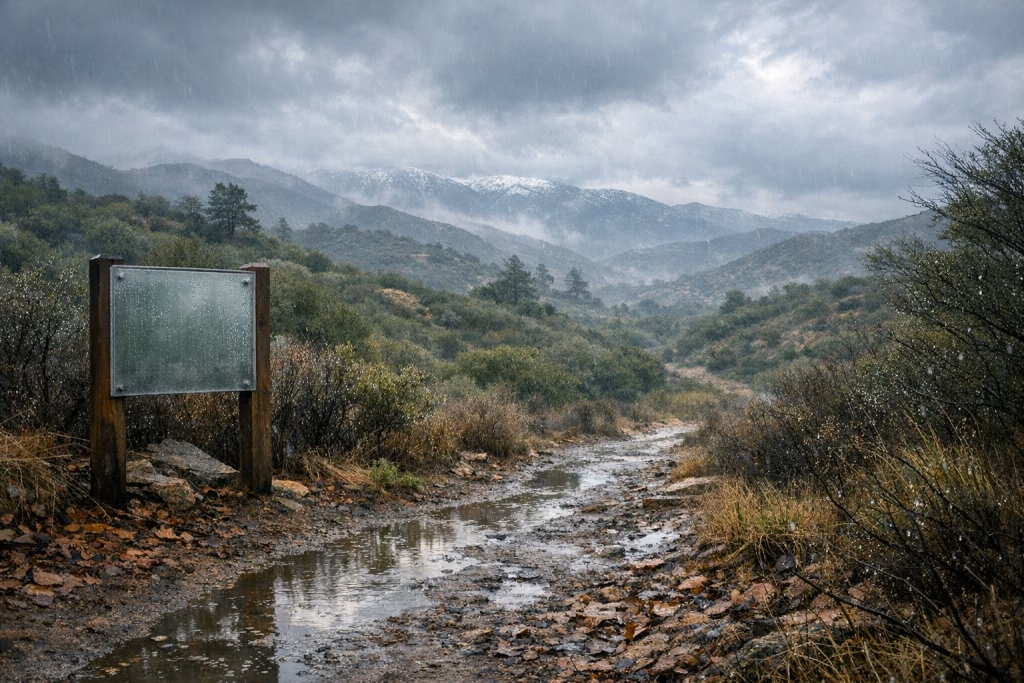
Rainfall Patterns in San Diego Early 2026 Explored in Detail
I’ve kept weather notes on and off for years, mostly because it helps me make sense of what my eyes and skin already feel. You don’t need a doctorate or a backyard lab to notice when San Diego “dry season” starts acting a bit… cheeky. One week you’re watering the garden like a Victorian grandparent fussing over roses; the next you’re wiping mud off your shoes and checking whether the patio drain is up to the job.
In this post, I’ll walk you through what rainfall looked like across late 2025 and early 2026 in the San Diego area, with a special focus on observations from a spot in the Elfin Forest area (roughly the inland hills between Encinitas and Escondido). I’ll also compare those notes with nearby places that often show up in regional summaries—coastal cities and higher-elevation inland communities—because, as you’ll see, a few miles can make a real difference here.
And yes, I’ll keep this practical for you. If you live in North County Coastal, inland valleys, or you commute between them, you’ll recognise the pattern: coastal drizzle vs. inland bursts, wind events that arrive with a bit of theatre, and mountain snow totals that feel like they belong in a different state entirely.
Why San Diego Rainfall Can Feel “Patchy” (Because It Often Is)
San Diego County sits in a sweet spot—until it doesn’t. The Pacific moderates temperatures, coastal marine layers mess with what “cloudy” means, and the terrain changes quickly as you move inland. From sea level to foothills and then to proper mountains, you can cross several mini-climates in a single drive.
What this means for you in real life:
- A coastal station might report light totals while a foothill neighbourhood sees a punchy downpour.
- Wind gusts often spike with fronts, especially as storms push through passes and canyons.
- Higher elevations frequently “overperform” on rain totals, and mountains may turn the same system into heavy snow.
I’ve noticed that people sometimes argue about whether it “really rained” because they’re each telling the truth from their own postcode. That’s San Diego weather for you—utterly sincere and completely inconsistent.
The Observations: A Foothill View from Elfin Forest (Early 2026)
The source notes describe a location in the Elfin Forest area at about 777 feet elevation, with rainfall measured via a rain gauge and wind referenced through gust observations. I’m not going to pretend I can independently verify each single moment of measurement, so treat this as a structured reading of the logged events—useful for understanding patterns, not for auditing someone’s instruments.
January 2026: A Wet-Enough Start Without Constant Drama
January opened with a sequence of light-to-moderate events. Nothing like a monsoon fantasy, but enough to reset the ground and remind you that winter in Southern California still has teeth.
From the notes:
- 2 January: light showers added about 0.07 inches; the storm total climbed near 1.87 inches.
- 3 January: fog and light showers added about 0.05 inches; later it brightened up with partial sun.
- 4 January: around 0.20 inches overnight, then a heavier burst later added about 0.10 inches.
- 5 January: roughly 0.49 inches overnight; a two-day total around 0.59 inches, followed by clearing skies.
When I read logs like this, I always think of how these “small” numbers influence daily life. A tenth of an inch doesn’t sound like much, but it can change trail conditions, commute visibility, and how quickly the soil takes on water in the next system. In foothill areas with uneven drainage, these early-season accumulations can set the stage for runoff later.
Later in the month, the notes mention a lull and a smaller value standing around 0.05 inches as of the 24th, alongside a regional two-day summary from the National Weather Service (NWS). That shape—early activity, a pause, then background drizzle—fits a typical winter rhythm here.
What January 2026 Suggests
- Storms arrived in pulses, with one or two more intense bursts layered on top of lighter showers.
- Clearing followed quickly, which is classic Southern California: you can go from wet roads to bright sun in a single afternoon.
- Fog played a role, especially overnight and morning, which matters if you drive coastal-to-inland routes.
February 2026: Three Storms in a Row (And the Wind Shows Up Properly)
February stands out in the notes as the month where the atmosphere stopped being polite and started being memorable. Three storms arrived in close succession, with meaningful wind gusts and clear regional contrasts—especially when you compare foothills to inland mountain areas.
Storm Sequence and Wind Gusts
The notes outline three storms around mid-to-late February:
- 16 February: light rain from late morning, a front passing in the afternoon, and wind gusts reported around 46 mph.
- 18 February: heavier overnight rain with strong wind; gusts reported in the mid-40s to mid-50s mph range; around 0.44 inches logged for that storm segment, with a running multi-storm total near 1.89 inches.
- 20 February: about 0.59 inches logged; wind gusts around 36 mph; a three-storm total placed near 2.48 inches.
Those gust numbers matter. Even if rainfall totals stay moderate, wind changes the “felt” severity of a storm. It knocks branches down, throws debris into gutters, and turns a simple rainy day into a power-outage lottery in some neighbourhoods.
Regional Comparisons: Why the Inland and Mountains Often Win
The notes compare the foothill totals with inland locations that commonly report higher precipitation during these setups. The pattern described is familiar: inland and higher elevation areas can pick up notably more rain from the same sequence.
In the referenced comparisons, higher inland totals appear substantially larger during the mid-February storms, and the mountains reportedly received heavy snow (measured in feet, not inches). I can’t verify each figure here, but the broad point holds: when cold air and elevation line up, mountain regions can turn a “wet week” into a genuine winter storm cycle.
From a planning perspective, that means:
- If you live coastal, you might call it “a bit wet.”
- If you live inland, you might spend the week watching slopes, drains, and older trees.
- If you’re heading to mountain routes, you need to treat it like proper winter travel.
What February 2026 Suggests
For me, the biggest takeaway is consistency across the three events: wind plus repeated rainfall. Repetition matters because the ground doesn’t fully reset between storms. Water saturation builds; small creeks respond faster; minor slope issues become more likely. Even when each event is “manageable,” the sequence can still strain local drainage and create scattered trouble spots.
Late 2025: November and December Set the Stage
If early 2026 looks lively, late 2025 reads like the prelude. November and December include notable storm entries, including heavier bursts and multi-day showers. In Southern California, a wet November often changes how people talk about “winter expectations.” Suddenly, everyone remembers where they left the umbrella they never use.
November 2025: Repeated Storm Activity
The notes describe mid-November as particularly active, with one larger storm followed by additional events.
- 15 November: a “big storm” with heavy rain and a reported total around 1.38 inches by late afternoon, then drizzle.
- 16 November: overnight showers pushing the total higher, reported around 1.54 inches.
- 18 November: another event reported around 0.73 inches.
- 20–23 November: a third storm sequence mentioned, with totals reported around 0.46 inches by the 23rd.
I’ve lived through enough San Diego “big storms” to know the public reaction follows a predictable script: the first heavy day brings excitement, the second brings annoyance, and by the third people start taking puddles personally. Yet these sequences are exactly what replenish local water systems—when they arrive at a reasonable pace and don’t come with severe flooding.
December 2025: Holiday-Season Rain With Heavier Bursts
December includes a Christmas Eve entry with heavier bursts and a later event a few days after:
- 24 December: a band of rain with heavy bursts reported around 0.65 inches.
- 27 December: a lighter-to-stronger shower pattern reported around 0.29 inches.
This is the sort of rain that messes with holiday travel plans in a modest but very real way. Roads get slick quickly after dry spells, and people who normally drive as if it’s always July suddenly have to negotiate water on the carriageway. If you’ve ever watched a queue form at the first set of traffic lights after a downpour, you’ll know what I mean.
Looking Further Back: Early Markers From September 2025 to Spring Patterns
The notes also touch on earlier rainfall markers (including thunderstorms and spring showers). I’m including them because they illustrate the broader rhythm: San Diego rainfall doesn’t always arrive as one tidy winter block. You can get scattered thunderstorms in late summer, then weeks of nothing, then a sudden wet spell that feels out of character until you remember history is messy.
September Thunderstorms (Late Summer Surprise)
There’s a mention of early September thunderstorms that affected inland areas more than coastal ones. That split happens often with convective systems: heat inland fuels development, while the coast stays cooler and more stable.
If you track these, you’ll often notice:
- Inland totals spike fast in short windows.
- Coastal areas may barely register beyond a few drops and dramatic clouds.
Spring Showers and “Odd Blob” Rain
The notes reference spring events (including a March storm that stands out as unusual in character). Spring systems in Southern California can feel disorganised—less like a strong front and more like scattered showers that don’t behave like a proper winter storm. They can still add up, though, and they often arrive with the kind of lighting that makes the hills look freshly painted.
Wind, Snow, and Why These Details Matter
Rainfall totals grab attention, but wind and snow often tell the real story of impact. The notes mention gusts in the 40–50+ mph range during some storms. That’s enough to drop branches, shift fences, and turn a routine “rain day” into a minor maintenance weekend.
Wind: The Uninvited Guest at the Storm Dinner Party
When you see gusts above about 40 mph in local logs, you can assume someone’s bin went on a little adventure down the street. Wind also changes how rain falls: it can drive it sideways into vents, under doors, and into the parts of a home exterior you rarely think about until you’re holding a towel and sighing.
If you’re in foothill or canyon-adjacent areas, wind can amplify quickly as fronts pass. The notes reflect that, with several gust spikes tied to frontal timing.
Mountain Snow: Same System, Completely Different World
The notes describe heavy mountain snow during the February sequence (measured in feet). That matches a well-known Southern California reality: you can experience rain at low elevations and winter-storm conditions in the mountains from the same weather pattern.
If you travel between regions, this matters because:
- Tyre and chain requirements can become relevant quickly in mountain zones.
- Road closures often depend on wind and visibility as much as snowfall depth.
- Temperature swings can create icy layers after melt-and-refreeze cycles.
What You Can Learn From These Rainfall Notes (Even If You’re Not a Weather Nerd)
Let’s make this useful in a straightforward way. If you live in San Diego County—or you manage landscaping, property maintenance, construction scheduling, deliveries, or outdoor events—these patterns tell you how to think about risk and timing.
1) Treat “San Diego Rain” as a Set of Micro-Events, Not a Single Forecast
In the notes, several days show light showers, then a heavier burst, then clearing. If you plan your day around “rain all day,” you’ll often be wrong. If you plan around windows, you’ll do better.
- Run errands after the primary band passes, not before it arrives.
- Schedule outdoor work for the clearing periods, but leave margin for a late shower.
2) Expect Inland Totals to Run Higher in Many Winter Setups
Comparisons in the notes reinforce a pattern many locals already feel in their bones: inland areas frequently receive higher totals than the immediate coast. That doesn’t mean the coast stays dry; it means totals can be modest while inland gauges tick upward.
If you’ve got family or staff spread across the county, you’ll avoid confusion by sharing location-specific info rather than the “San Diego” headline figure.
3) Wind Is a Practical Hazard, Not Just an Annotation
Gusts in the 40–50 mph range change the impact profile. You can prepare for wind in a very boring, very effective way:
- Clear gutters and drains before the wet period.
- Secure loose outdoor items (bins, cushions, lightweight furniture).
- Trim vulnerable branches if you can do it safely and legally.
I’ve learned the hard way that you don’t want to be doing any of this when the rain is already turning sideways.
How to Track Rainfall Like a Local (Without Becoming Obsessive)
You don’t need to run a full weather station to keep useful records. A simple rain gauge and a consistent routine get you far. If you’re the sort of person who enjoys patterns—guilty as charged—logging helps you notice how your specific street behaves.
A Simple Home Rainfall Logging Routine
- Measure at the same time daily during storm periods (morning works well).
- Write down wind notes if you notice gusts or unusual conditions (fog, hail, intense bursts).
- Record “start/stop” windows so you can compare forecast vs. reality.
- Keep it short; a single line per day beats an abandoned spreadsheet.
What Comparisons Actually Help
When you compare your notes to nearby communities, don’t chase perfection. Look for consistent relationships:
- Does your spot usually run higher than the coast?
- Do you get heavier bursts when storms arrive from a particular direction?
- Does fog correlate with light overnight accumulation?
After a season, you’ll have your own “house climate profile,” which sounds grand, but it’s really just you getting better at predicting your own driveway.
A Quick Note on the Source: What We Can and Can’t Conclude
The material behind this post includes individual gauge readings and references to regional summaries. Those logs are valuable for narrative and pattern recognition, yet they don’t replace official station datasets or a formal climatological analysis.
So here’s how I suggest you use this post:
- As a story of the season across late 2025 and early 2026.
- As a practical guide to how rainfall differs between coast, inland foothills, and mountains.
- As encouragement to track your own micro-climate, because your street often tells you more than a county-wide number.
SEO-Focused Takeaways: Rainfall Patterns in San Diego (Early 2026)
If you searched for “San Diego rainfall early 2026,” “Elfin Forest rain totals,” or “North County storm sequence February 2026,” the main points from these notes read clearly:
- January 2026 showed recurring light-to-moderate showers with occasional heavier bursts and quick clearing.
- February 2026 delivered a notable three-storm sequence, with meaningful wind gusts and higher totals in inland/higher-elevation locations.
- November and December 2025 included active storm periods that helped set the seasonal baseline.
- Local variability remained the defining feature: coastal totals often stayed lower than foothill and inland totals during the same systems.
- Wind and mountain snow shaped real-world impact as much as rainfall numbers.
If you want, I can also turn these patterns into a neat, publishable “storm timeline” table or a county-zone checklist for homeowners and small businesses. I use those formats a lot because they’re easy to skim when the weather’s already doing its thing outside.