
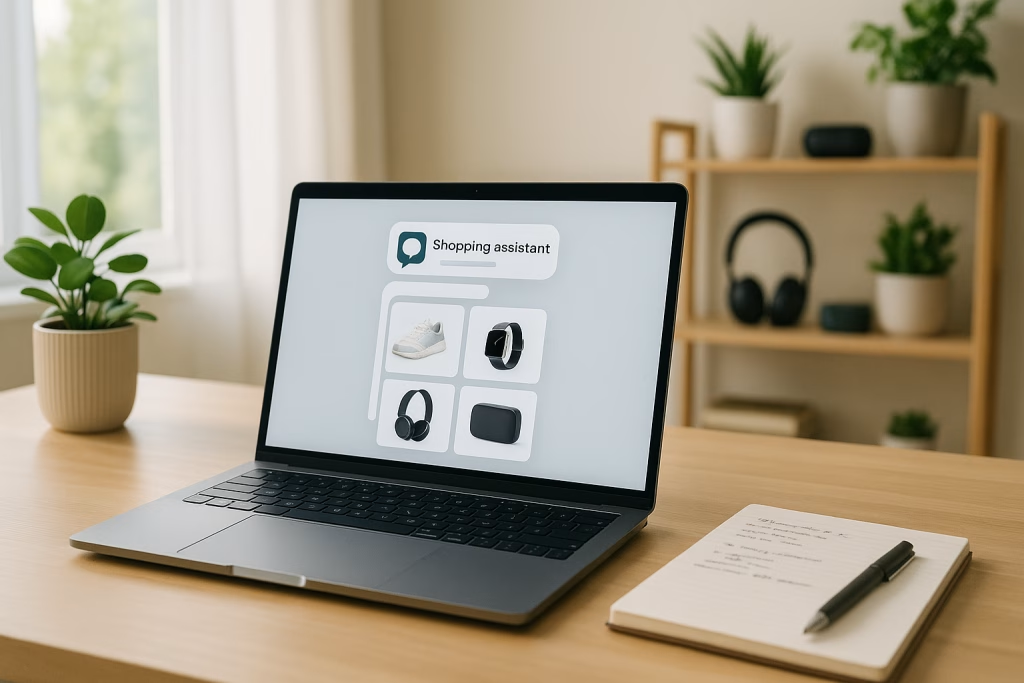
ChatGPT Shopping Research Simplifies Smarter Product Choices
Introducing a New Approach: Smarter Shopping with ChatGPT
On 24th November 2025, OpenAI set a new benchmark for online shopping, unveiling the Shopping Research experience within ChatGPT. Powered by the GPT-4o model, this new feature redesigns the entire research phase of your shopping journey. Rather than simply listing products, the system conducts thorough market research, reviews offers, and distils results into a natural conversation—something few e-commerce tools have truly managed. As someone who spends far too long scrolling through endless tabs and price comparators (speaking from experience here!), I find this shift both overdue and rather exciting.
Shopping online can be, let’s face it, a bit of a faff. The maze of competing offers, reviews scattered across dubious forums, and the ever-present risk of missing out on a bargain is familiar territory for most of us. With Shopping Research, that landscape changes from the ground up.
How ChatGPT Shopping Research Works in Practice
Step One: Conversational Discovery
Think back to all the times you found yourself opening yet another comparison website or toggling between stores to find the 'best’ deal. Now, instead, you start a chat. Tell ChatGPT, „I’m looking for a waterproof jacket under £60” or „Find a blender with at least 1000W and good ratings.” The GPT-4o model parses your message, picks up on context, price limits, colour preferences, or even brand biases you’ve mentioned, and fetches tailor-made suggestions. You get:
- Product links—straight to the source (no middlemen creepers!)
- Images—none of that low-res, questionable-seller nonsense
- Prices and availability
- Review highlights, so you don’t have to trawl Amazon comment sections
All these land in a single chat window, which is – I have to say – an absolute treat for those of us who value our time.
Step Two: Real-Time Refinement
This is where it gets genuinely interactive—ChatGPT doesn’t just fire off suggestions and leave you to it. If you want more options or prefer a different colour, all it takes is a follow-up message. „Show me something in navy” or „Can you find a cheaper option?” triggers fresh research, instantly updated in the same flow. No logging into another site, no hunting for filter sliders lost in clunky menus.
What I’ve noticed using this system is the way it simulates having a knowledgeable shop assistant by your side—one who doesn’t upsell everything but listens, adapts, and actually seems to care about what you want. It’s a world away from typing keywords into a sterile search box.
Personalisation at Its Core
Unlike generic search engines, ChatGPT draws on previous messages in your chat, so your intent isn’t lost between queries. In situations where details are missing, it asks clarifying questions—”Is brand important to you?” or „Would you prefer delivery this week or next?” Over time, this back-and-forth results in much more relevant recommendations—the kind that save you from buyer’s remorse.
Now, I’m no stranger to collecting more information than I actually need before making a decision, but this sort of contextual memory genuinely speeds things along. Suddenly, each new product on the list feels like it belongs there rather than being a random algorithmic artefact.
The Clear Advantages Over Traditional Online Shopping
Time-Saving and Stress-Reducing
The most seductive aspect of Shopping Research is hands-down the sheer efficiency. Rather than spending evenings clicking back and forth, juggling competitor tabs, and attempting to decode review aggregators, I can describe what I want in plain English. The system fetches a variety of suitable results, so the process is not just faster, it’s radically less stressful.
- No need to master complicated search syntax
- Comparison across brands, specs, and retailers happens behind the scenes
- Single-session research: all in one conversational thread
It feels, for once, like the technology is working for me, not against me.
Bespoke Recommendations
I’m always a little sceptical about 'personalisation’ claims in tech—often it’s more buzzword than genuine benefit. Here, though, personalisation is actively driven by real conversation.
Say you’ve researched baby strollers last week and now you’re looking for a car seat. ChatGPT picks up on this, asks the right follow-up questions („Any compatibility requirements?”), and draws from your ongoing interaction. If you’ve ranted about certain brands (we all do), those get dropped in priority, without you having to repeat yourself.
Instant Comparison, No Fuss
With legacy systems, even the most prominent comparison services often lack coverage across niche retailers or include dubious listings. Consulting multiple sources is still often a must. Now, ChatGPT’s real-time search mechanism consolidates prices, product information and reviews into one window. This saves both brain power and several clicks’ worth of patience.
- Side-by-side price, feature, and availability comparison
- Direct links to retailer pages (no scraping or obscure redirect URLs)
- Summary of user ratings at a glance
This, for me, closes the gap between wishful browsing and decisive buying.
From Recommendations to Checkout – The Shape of Things to Come
Expanding Beyond Product Discovery
OpenAI, not content to stop at product search, has signalled further development in this space. In collaboration with Stripe and leading online retailers, they’re crafting an Instant Checkout feature (as reported from credible US industry outlets). At present, this function remains in limited pilot stages, enabling users in the USA to buy products via chat directly from established marketplaces, with a couple of clicks. The aim is that, soon enough, you could spot a desirable find, click 'Buy’, confirm your details, and be done—no unnecessary redirects.
Though most users are still in the 'research and recommend’ flow for now, it’s clear that the architecture is being laid for even more streamlined purchasing experiences down the line. The implications for how we interact with online commerce are rather profound—especially for those of us who tend to procrastinate at the checkout stage!
Maintaining Trusted Transaction Flows
It’s worth adding, since it’s something I’ve wondered about while testing, that ChatGPT doesn’t process the final sale itself. The actual purchase happens on the retailer’s page, to ensure security and compliance. That’s a relief in terms of trust and confidentiality—especially given all the recent stories of privacy breaches and data mishaps.
What you get instead is an elegant hand-off: you’re routed directly to the shopping cart with all your selections ready and waiting. No missed steps, no lost context, no half-filled forms.
A Step-By-Step: How to Make the Most of Shopping Research
For those curious to dip a toe in, using Shopping Research is refreshingly straightforward. Here’s how I typically go about it:
- Log in to ChatGPT: Select the latest GPT-4o model.
- Describe your needs naturally: For example, „I’m after a budget-friendly, compact coffee machine for a small kitchen.”
- Review suggestions: Results usually include product name, photo, price, seller, a short review snippet, and purchase links.
- Refine further via chat: Ask for alternative colours, price brackets, or even sustainability-focused suggestions if you’re feeling conscientious!
- Select and proceed: Click a product link to head straight to purchase on the retailer’s site.
You can re-enter the chat at any time to ask for alternatives or check for up-to-date pricing. I’ve found this especially handy when, say, a promotion expires—the model picks up on it, and the suggestions adjust in real time.
Impact on E-Commerce: The Rise of AI-Driven Shopping
The unveiling of Shopping Research is not happening in isolation. Giants like Google and Microsoft are developing their own AI-powered shopping interfaces. Google, for instance, has started integrating shopping prompts, price tracking, and streamlined checkout within their search results and Gemini AI platform.
The wider trend is unmistakable. The goal is to reduce the friction between product discovery, decision-making, and purchase. No more getting lost in a forest of affiliate links or bombarded by irrelevant suggestions.
I’ve witnessed how, over the last decade, the 'last mile’ of online shopping—deciding what to buy and from where—remained painfully complicated. Now, with more tech titans jumping in, we’re finally nudging closer to a genuinely supportive, intuitive buying process. For both casual shoppers and, say, procurement professionals, that shift is long overdue.
For Businesses: What Does This Mean?
From my own work in marketing tech, I see several keys here:
- Visibility: Brands need to ensure their whole catalogue is easily discoverable via structured data to feed these AI engines. Otherwise, you’ll be left out of the new default buying journeys.
- Reputation Management: Effusive, credible reviews will carry even more weight when summarised by an AI model rather than being buried below the fold.
- Adaptation of Marketing Strategies: Old-school banner ads and abrasive pop-ups may finally fall by the wayside, replaced by subtle, helpful nudges within the conversational flow.
In other words, if you’re responsible for sales or marketing, it’s time to get your technical ducks in a row, pronto.
The Human Element – Less Stress, More Confidence
Decision Fatigue, Meet Your Match
One honestly underrated joy here is how ChatGPT’s Shopping Research cuts down on decision fatigue. We’ve all been there — endless scrolling, second-guessing, reading contradictory reviews, giving up, and putting off the purchase ’til tomorrow. By focusing the experience into a guided, responsive chat, the process feels not only easier, but oddly reassuring.
If you’re like me, shopping used to spark more anxiety than excitement, especially for anything even faintly technical (hello, kitchen appliances). Now, someone—or rather, something—has done the tedious trawling, so the outcome consistently feels satisfying.
Lowering the Learning Curve
For less tech-savvy users, the absence of specialist jargon and the ability to pose natural, everyday questions is enormous. I’ve helped both my parents and my teenage cousins use this feature, and both groups found it comfortable. No tiptoeing through obtuse filter menus or getting lost in “sponsored” results. Instead, a simple exchange—one where your needs are understood and respected.
Potential Limitations (and What’s Next)
As with any emerging technology, there are still areas to polish.
- Data Freshness: Availability and prices depend on the timeliness of the sources scraped. I’ve occasionally clicked through to discover a sale has ended. The system learns and adapts, but it’s not yet perfect.
- Regional Constraints: Not all markets are equally represented. For now, some local retailers remain out of scope, although coverage is improving with every update.
- Complex Preferences: While ChatGPT can clarify and re-search, the nuances of deeply personal choices (say, artisan materials or micro-brands) still require a bit of human persistence.
But, overall, I’ve found these niggles minor compared to the gains in efficiency and peace of mind.
The Future of Online Shopping: Where Might We Be Heading?
Looking ahead, it’s difficult not to get a bit starry-eyed about where this all leads. ChatGPT and its competitors are set on becoming the first port of call for everything retail. Instead of relying on half a dozen open tabs, I can envision a time where your intelligent assistant:
- Acts as your advocate—seeking out trusted sellers, flagging counterfeit risks, and ensuring product compatibility
- Incorporates ethical sourcing and environmental factors, if you so request („Only fair-trade coffee machines, please!”)
- Integrates seamlessly into digital wallets and smart home devices („Order me more oat milk tomorrow morning”)
Those sorts of „just ask, and it’s done” interactions once belonged firmly in the realm of sci-fi. Now, though, the gap between what’s possible and what’s practical is narrowing rapidly.
SEO and Content Implications: What Marketers Must Know
Given that AI systems are quickly becoming the filter between your product and the consumer, I think it’s critical to reflect on your brand’s digital presence. These new shopping experiences favour clear, up-to-date data and positive user feedback. Ensuring your products are easy to discover, with accurate metadata and rich, honest reviews, can spell the difference between attracting a loyal audience or vanishing into the online void.
In my agency life, we’ve been updating product feeds, auditing reviews, and strengthening website schemas more than ever. For content creators, this means thinking not just about humans, but also about how conversational AI will interpret and present your offerings. The old tricks—keyword stuffing, spammy meta tags, or shallow product descriptions—simply won’t cut it when AI is your gatekeeper.
My Top Tips for Making the Most of ChatGPT Shopping Research
After several weeks using the tool for both work and personal errands, I’ve come up with a few pointers that make all the difference:
- Be specific: The more detail you provide, the better the initial suggestions. Mention price boundaries, item sizes, must-have features, or your dislike for certain colours or brands.
- Allow for back-and-forth: Don’t be shy about asking for alternatives, further clarifications, or explanations when something doesn’t make sense.
- Mention timing: If next-day delivery is crucial, say so upfront!
- Request bundles: Found a laptop you fancy? Ask ChatGPT to suggest suitable accessories or packages based on reliability and reviews.
- Use the session history: You can return to your Shopping Research chats anytime. Perfect for tracking price drops or revisiting earlier products without starting from scratch.
For the best results, treat the AI as you would a well-meaning shop assistant—direct but polite, and not afraid to ask for a better deal.
Cultural Context: Why Britons May Love (or Grumble About) This
It’s well known that UK shoppers have a healthy dose of scepticism toward pushy sales tactics and intrusive technology. Shopping Research in ChatGPT fits a little differently; it brings the helpfulness of a good John Lewis adviser, minus the pressure. The conversational approach, with its gentle prodding and quirky reminders („Are you sure you want pink?”), makes for an experience that is just the right blend of informal and professional.
If you ever watched an old British sitcom with a wisecracking shopkeeper, you’ll recognise a bit of that dry wit embedded in the chat. And honestly, the sense of save-yourself-a-few-quid pragmatism is very much on brand for us. I’m quietly hopeful this new approach will convert even the most ardent high-street loyalists.
Conclusion
The roll-out of Shopping Research in ChatGPT marks a significant milestone in the evolution of online shopping. As someone who’s been both overwhelmed and underwhelmed by digital commerce for years, I fully appreciate a solution that offers clarity, speed, and a genuine nod to personal preference.
Yes, there’s more road to travel—AI can’t yet guarantee the best deal every time or conjure the perfect artisanal find on a whim. But from where I’m standing, Shopping Research exemplifies technology at its best: serving people by demystifying complexity, saving time, and—dare I say—bringing a touch of fun back to shopping online.
If you haven’t yet tried it, well, there’s no time like the present. Pop a query into ChatGPT, let the model do the heavy lifting, and enjoy reclaiming your evenings for something altogether more enjoyable than sifting through tabs. And if you ever feel like you’re drowning in options again, remember: sometimes, the cleverest shopping move is simply to ask the right kind of help.